
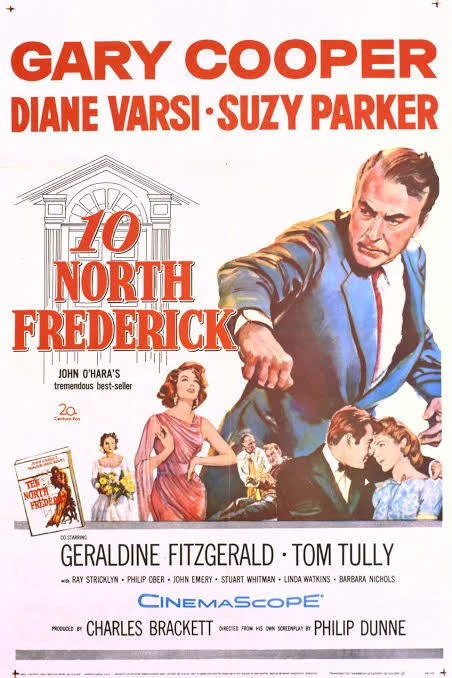
10 North Frederick
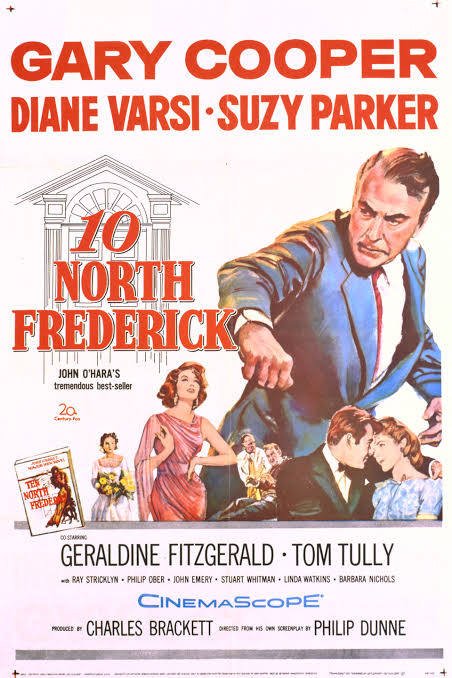
10 North Frederick
Directed by Philip Dunne. 103 mins. (1958)
Gary Cooper – Joe Chapin
A prominent Pennsylvania lawyer and political aspirant looks back on the personal compromises and family estrangements that shaped his rise to power.
Also starring Diane Varsi, Suzy Parker, Geraldine Fitzgerald, Ray Stricklyn, Tom Tully, and Stuart Whitman.
Based on the 1955 National Book Award–winning novel by John O’Hara. In the original book, Ann Chapin undergoes an abortion—altered in the film to a miscarriage for 1950s audiences.
Nominated for a Golden Globe Award and winner of the Golden Sail at the Locarno International Film Festival.
MARIA’S NOTES
The persona of Joe Chapin in this story by masterful writer John O’Hara was a strange role for my father to take on. Instead of the hero striding into the sunset after having vanquished the “bad guys,” Joe Chapin is a tormented soul. He wants to keep his integrity but allows himself to “sell out” for ambition’s sake.
Marry that with a bitter wife and a need to find real love as his years creep up on him, and he falls in love with his daughter’s beautiful young roommate.
His dilemma makes me think of the verse in the Bible where St. Paul writes:
“I do not understand what I do. For what I want to do, I do not do. But what I hate, I do.”
He is a man cut down by his own desires and circumstances, and I think the story reflects—intensely—the human drama of many, many lives, both urban and suburban.
John O’Hara and Gary Cooper knew each other, and O’Hara said of my father’s performance that it was very much on target—sensitive and understanding of a man like Chapin: a conflicted soul who turns to alcohol to hide from his fears of losing power, and perhaps more importantly, the loss of his youth.
The young actor Ray Stricklyn, who plays his son, spoke of intensely observing Cooper and trying to catch the secret of his seemingly effortless “acting.”
In the film, his son’s final lines sum up the story. At his father’s funeral, he says:
“He was a gentleman, in a world that no longer respects gentlemen.”
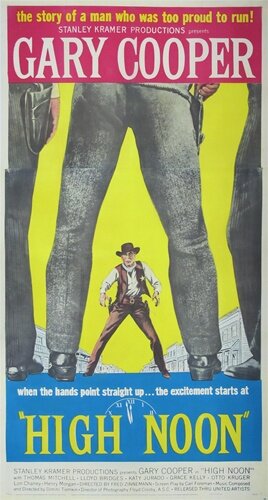
High Noon
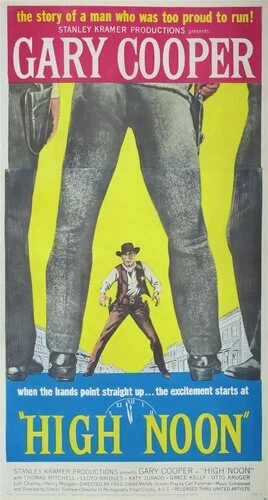
High Noon
Directed by Fred Zinnemann. 85 mins. (1952)
Gary Cooper – Marshal Will Kane
Grace Kelly – Amy Fowler Kane
A retiring frontier marshal must face a vengeful outlaw and his gang alone when his town refuses to stand with him.
Also starring Thomas Mitchell, Lloyd Bridges, Katy Jurado, Otto Kruger, Harry Morgan, and Lon Chaney Jr.
Directed by Austrian-born filmmaker Fred Zinnemann, the film unfolds in real time and became one of the most acclaimed Westerns ever produced. Made for $750,000, it went on to gross over $8 million in the United States.
Ranked #27 on the AFI’s 100 Greatest American Films (2007) and #2 on the AFI’s 10 Greatest Westerns. Winner of four Academy Awards, including Best Actor (Gary Cooper), Best Score, Best Song, and Best Film Editing; nominated for Best Picture, Director, and Screenplay. Winner of the Writers Guild Award for Best Written American Drama and selected for preservation in the National Film Registry (1989).
MARIA’S NOTES
Nobody involved in the making of High Noon thought they were making more than just another, hopefully, good little Western which cost all of $750,000. It was not filled with the expected action of cowboys vs. Indians chasing each other across the plains. However, in the talented hands of several artists from the Writer Carl Foreman to Director Fred Zinnemann, to its star, my father, Gary Cooper, the beautiful ladies Grace Kelly and Katy Jurado, the sinister villains including Lee Van Cleef and the wonderful theme song composed by Dimitri Tiomkin, this “little Western” turned into an iconic film that has affected and touched world leaders from Japan to Poland and shook up American politics at the time of one of our more shameful periods – the McCarthy hearings. According to those hearings, there was a Communist under every bed. My father was extremely close to High Noon’s writer Carl Foreman, in fact, he called him Uncle Carl and when the film’s producer Stanley Kramer wanted to take him off the film because of alleged Communist propaganda, my father simply said, “If Foreman goes, Cooper goes.”
Many books and articles have been written about High Noon. The story exposed the cross currents buried in human nature and politics. We see in the film a reflection of our own inner conscience and its struggle between fear and doing what you know is right – to do what you have to do for a greater good, or in the name of justice – concepts which are not limited to any one era. In fact, there’s a very interesting parallel between High Noon and Ernest Hemingway’s The Old Man and the Sea – both challenge our own personal definitions of Honor, Courage, Justice and Fear. My father won an Academy Award for his portrayal of Marshal Kane. It was the first time the “hero” of a film was shown to be human and vulnerable.
I strongly recommend for further reading the recent book, High Noon: The Hollywood Blacklist and the Making of an American Classic by Glenn Frankel.
Maria Cooper Janis
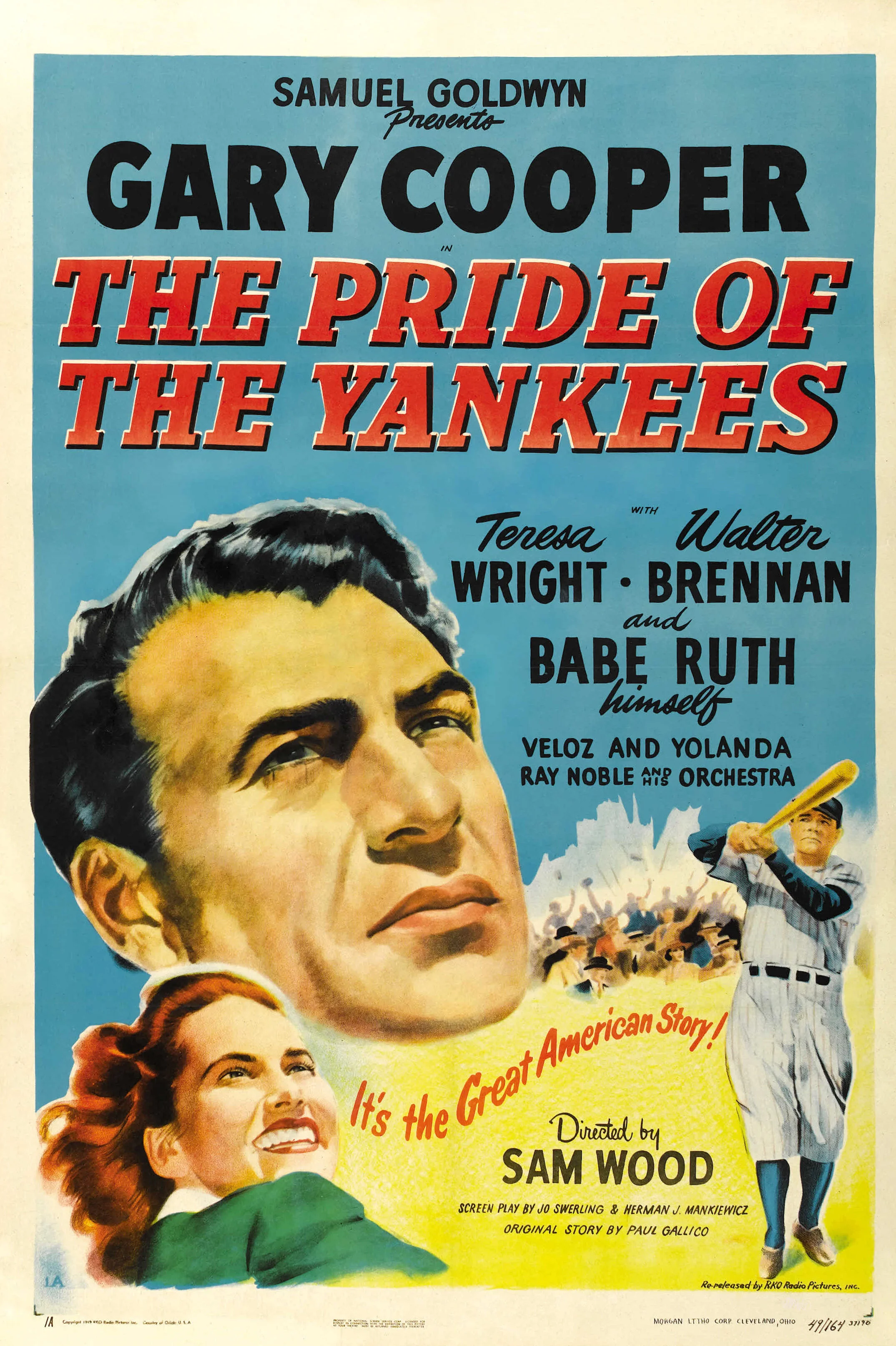
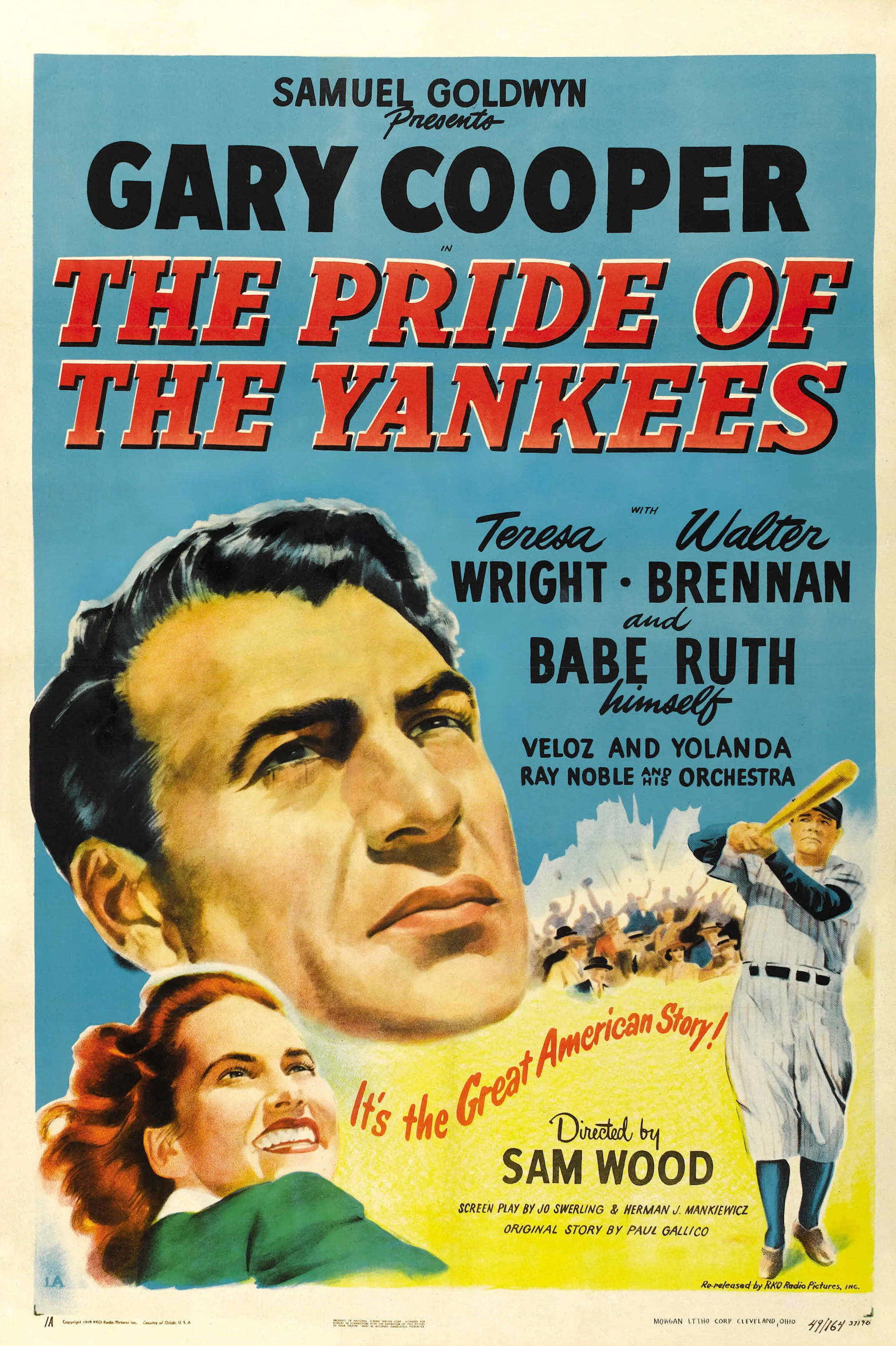
The Pride of the Yankees
The Pride of the Yankees
Directed by Sam Wood. 128 mins. (1942)
Gary Cooper – Lou Gehrig
A devoted son and humble ballplayer rises from New York sandlots to become one of baseball’s greatest legends, only to face his greatest trial when a devastating illness brings his record-breaking career to an early end.
Also starring Teresa Wright, Walter Brennan, Dan Duryea, and Babe Ruth as himself.
Based on the life of New York Yankees first baseman Lou Gehrig, whose 2,130 consecutive games earned him the nickname “The Iron Horse.” The film culminates in a recreation of Gehrig’s 1939 farewell at Yankee Stadium, including his immortal declaration that he was “the luckiest man on the face of the earth.”
Nominated for ten Academy Awards, winning Best Original Score.
MARIA’S NOTES
The season starts to change— it stays light a little later each day and, Good news “BASEBALL SPRING TRAINING starts in Florida…which brings my mind always- to one of my father’s favorite films. THE PRIDE OF THE YANKEES in which he plays the role of Lou Gehrig, referred to as The Iron Horse. He batted .300 for 12 straight seasons. His baseball career and life was tragically cut short as he was afflicted by the disease: ALS (Amyatropic Lateral Sclerosis)— known even today as the Lou Gehrig Disease. How awful that even today some 75 years plus later, science and medicine have still not been able to find a cure.
My father was very honored to be chosen to play the role of Lou Gehrig, but he balked at first and he knew one of his major challenges would be to try to be “a lefty” as my father was right handed.Sam Goldwyn, the producer, engaged the ‘training” services of Yankee trainer Lefty O’Doul to coach my father how to throw and bat left handed… I love this photo where O’Doul who believed that chopping wood with a long ax and from the left shoulder— with the wood-chopping stride and rhythm was essentially the same as the batting swing… made an early comment about my father’s efforts… You throw a ball like an old woman tossing a hot biscuit!!”
“Poppa” worked out hard himself at home too, working with a large boxing/punching bag and practicing bowling with his left hand so that using it would become more natural.The idea of playing such a known and beloved person kind of intimidated my father. He said “You can’t “trick up” a part like this with mannerisms or gimmicks.” So many millions of people knew Gehrig, watched him and knew how he handled himself.
When Gehrig was honored at Yankee Stadium he gave one of the most famous ‘farewell” speeches heard either in real life or on the screen.Nothing needed to be added as he walked off the field to cheers, national public admiration and tears.Lou Gehrig continues to be an inspiration to ballplayers and people everywhere who know his story. My husband, concert pianist Byron Janis, who is a huge baseball fan and I brought this Lobby card from the movie as a gift to George Steinbrenner when we sat with him at an “Old Timers Day” game atYankee Stadium. He said ‘Oh, would you like me to take this down to the locker room and get the “boys” to sign it?” Of course I said”. Byron and I love looking at both sides!
Maria Cooper Janis
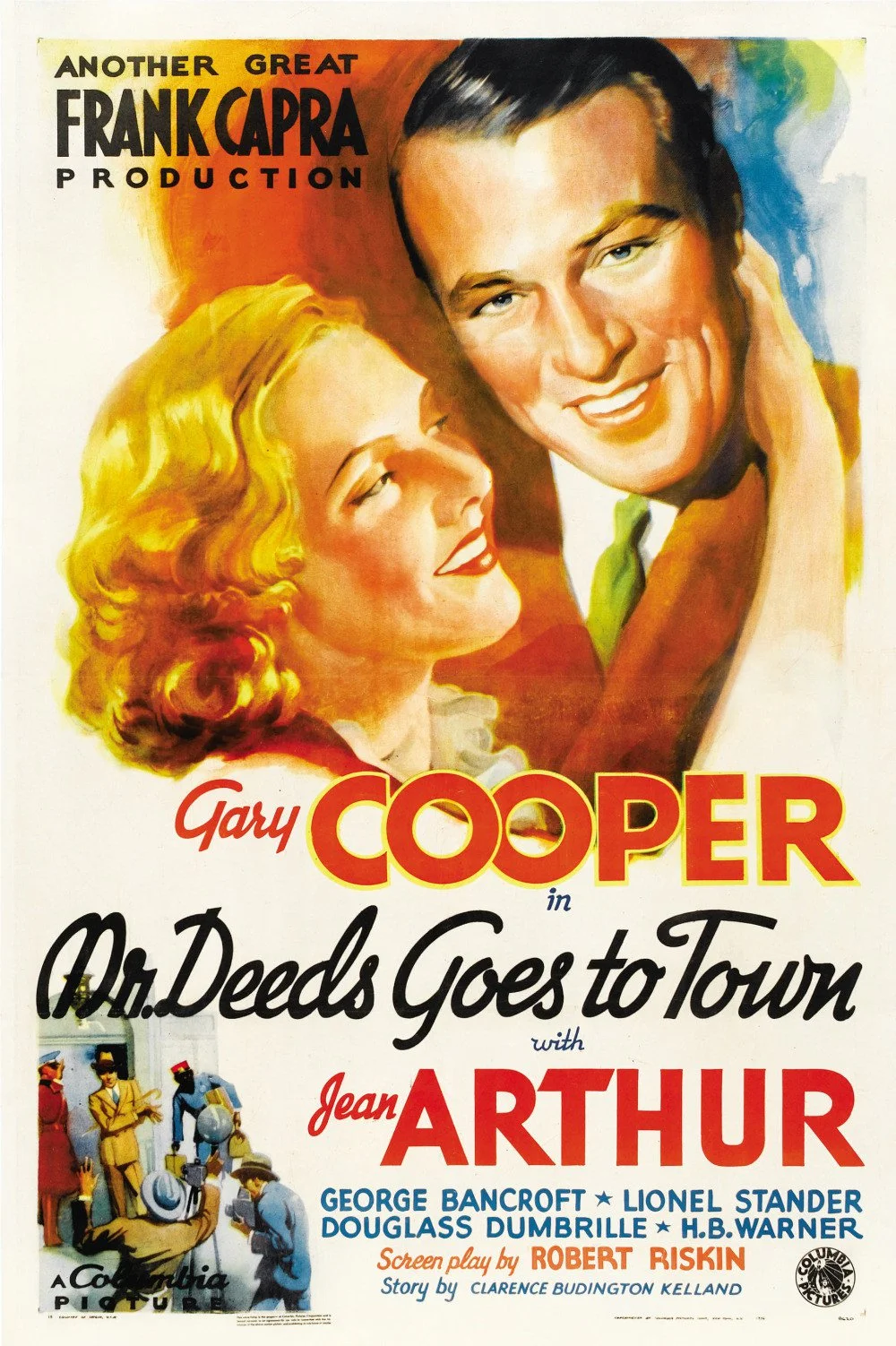
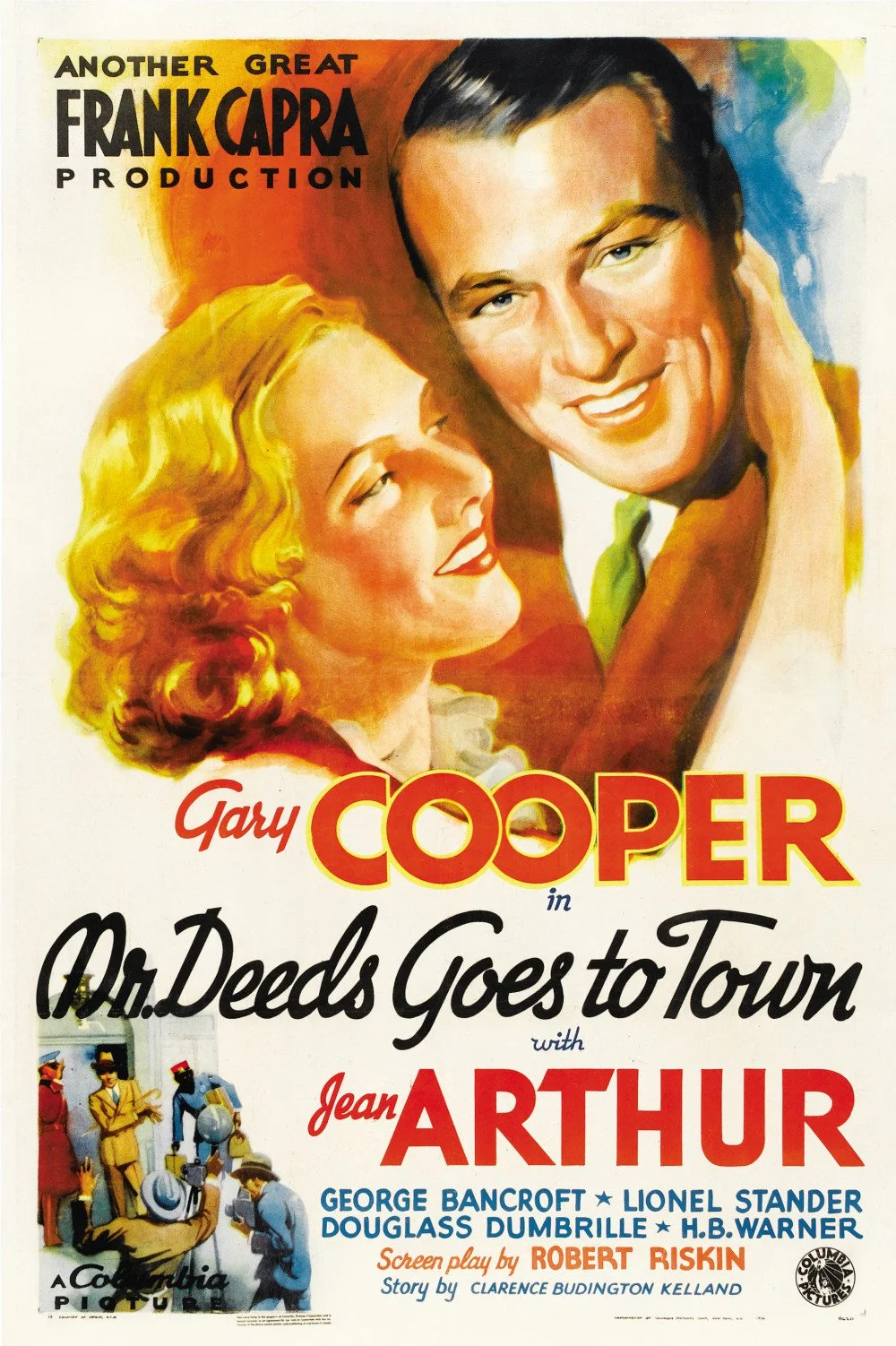
Mr. Deeds Goes to Town
Mr. Deeds Goes to Town
Directed by Frank Capra. 115 mins. (1936)
Gary Cooper – Longfellow Deeds
A kind-hearted small-town poet unexpectedly inherits a vast fortune and moves to New York City, where opportunists, schemers, and a cynical reporter test his innocence—until his integrity quietly transforms those around him.
Also starring Jean Arthur, George Bancroft, Lionel Stander, and Douglass Dumbrille.
Based on Clarence Budington Kelland’s short story Opera Hat, the film became one of Frank Capra’s defining comedies of idealism and earned widespread acclaim for Cooper’s gentle, understated performance.
Nominated for five Academy Awards, winning Best Director (Frank Capra).
MARIA’S NOTES
I have a new insight into the background of one of my favorite of my father's films, Mr. Deeds Goes to Town, chosen by The New York Film Critic’s Circle as the Best Film of the Year (1936) and it garnered 5 nominations from the Motion Picture Academy - Frank Capra won for Best Director.
It is one of the key films in the career of Gary Cooper and was directed by the great Frank Capra with Robert Riskin writing the screenplay. His daughter Victoria Riskin has written a most interesting book about her father and mother, Fay Wray, one of the beautiful actresses of that era which gives an extremely accurate and fascinating look into the Hollywood of that time.
When asked about her father and which films most closely reflected his personal philosophy, she named Mr. Deeds as one of them. His development of the character Mr. Longfellow Deeds embodies the fact of the essential goodness of ordinary people and the ability of one man to stand up to the corruption and power plays of the rich and influential.
The film comments on that and the vulnerability of human nature. This all came together marvelously as directed by Capra and sensitively portrayed by my father with some good bits of humor thrown in. The chemistry between Jean Arthur and Gary Cooper was hidden in the beginning but poignant when finally revealed.
In January 2025, I had the wonderful experience of seeing Mr. Deeds on a big screen. It was shown as part of a Holiday series at the Film Forum in New York. One cannot compare the dramatic impact of watching a movie – any movie – as it was originally meant to be viewed. All aspects of the art form - from the acting, photography, sound effects, the impact of dialogue or the impact of silence - can only fully be appreciated in this way and not reduced to a screen measuring inches instead of feet.
Maria Cooper Janis
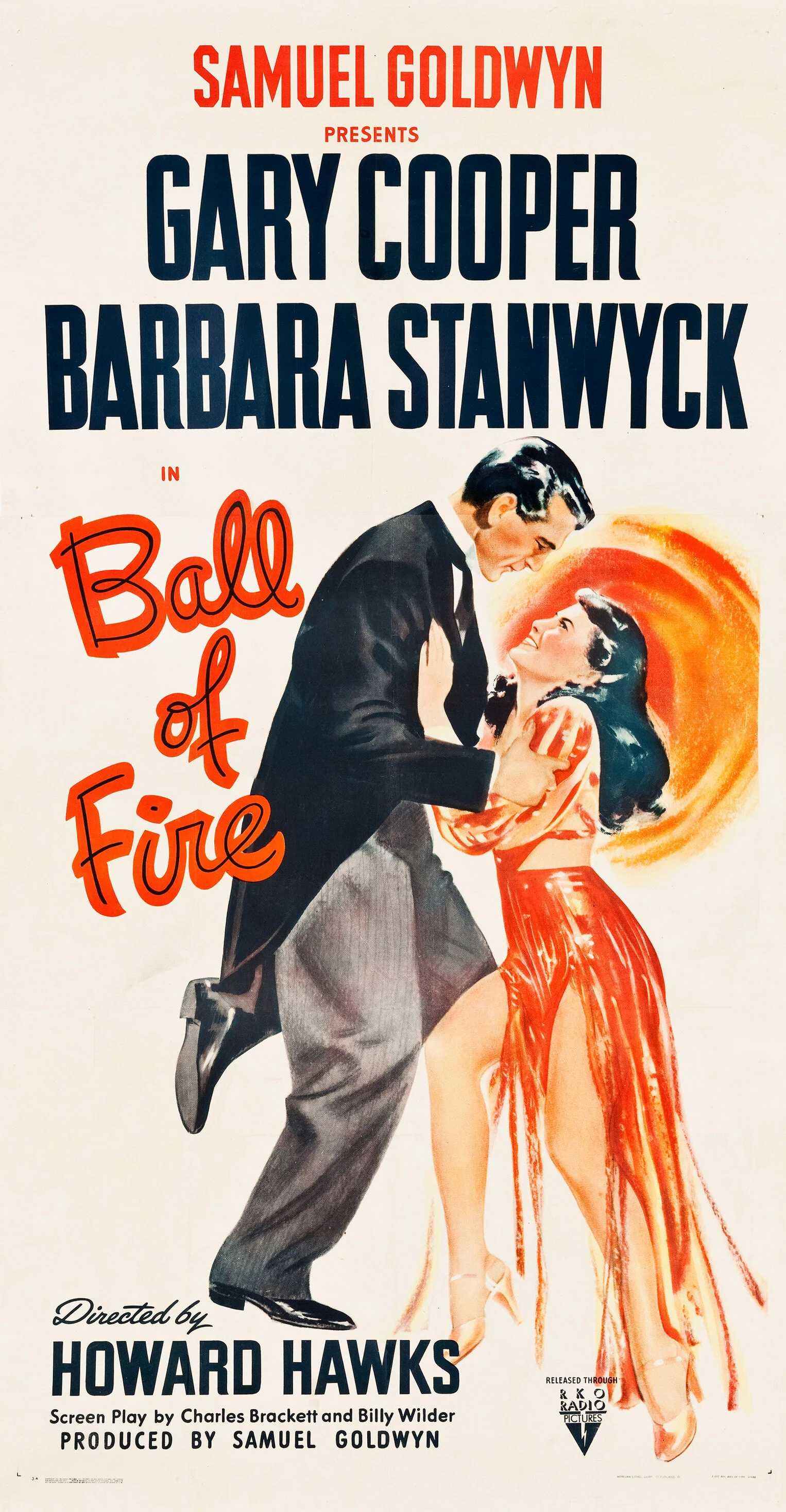
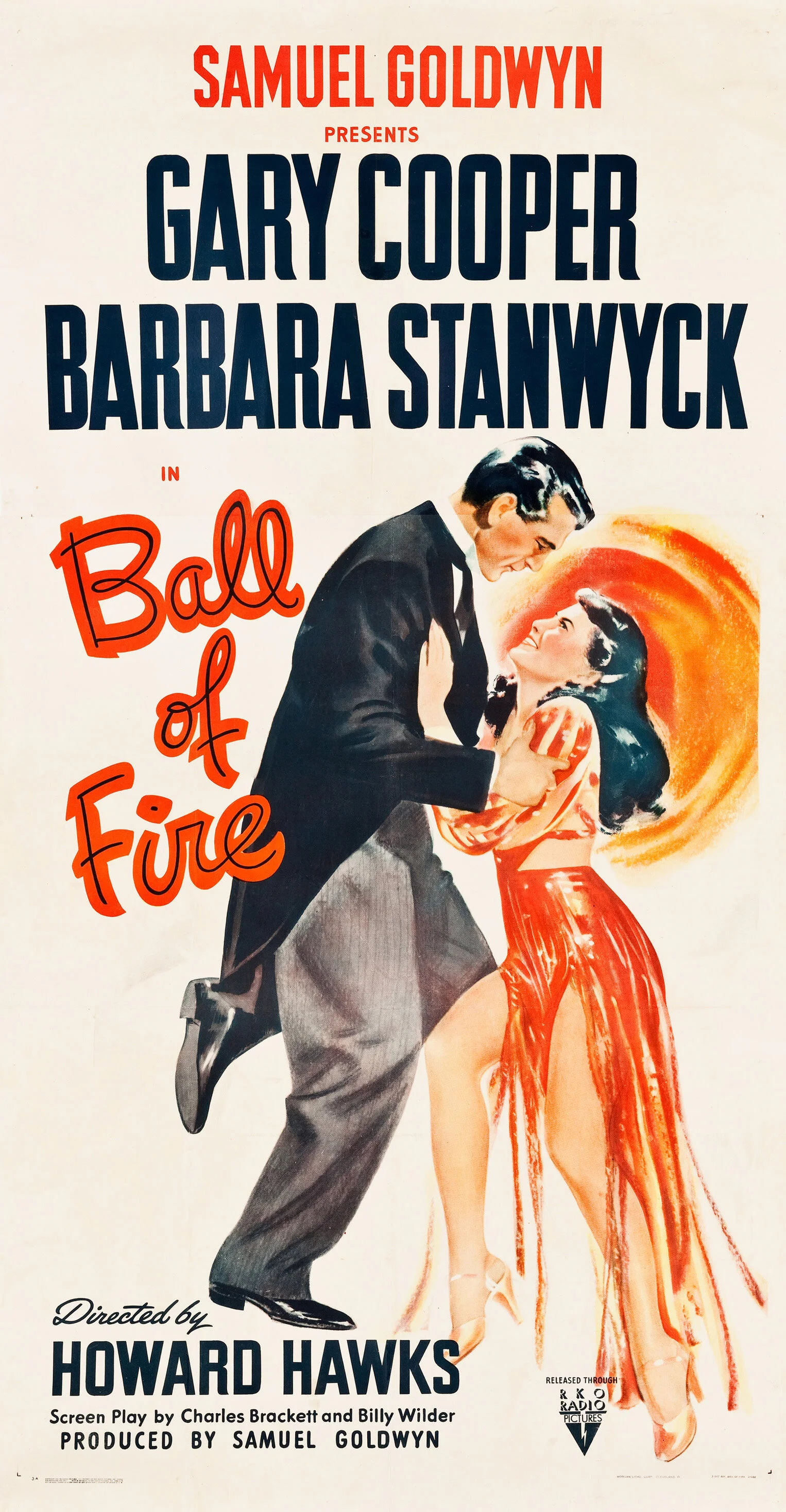
Ball of Fire
Ball of Fire
Directed by Howard Hawks. 111 mins. (1941)
Gary Cooper – Professor Bertram Potts
A shy linguistics professor, secluded with a team of fellow scholars compiling an encyclopedia, ventures into the modern world to research contemporary slang and unexpectedly falls under the spell of a streetwise nightclub singer hiding from the law.
Also starring Barbara Stanwyck, Oskar Homolka, Henry Travers, Richard Haydn, and Dana Andrews.
Written by Billy Wilder and Charles Brackett and inspired by Snow White and the Seven Dwarfs, the film pairs Cooper’s naïve academic with Stanwyck’s fast-talking performer in one of Hollywood’s most celebrated screwball comedies. The writers famously gathered authentic slang by observing teenagers, burlesque performers, and racetrack crowds around Los Angeles. The film received four Academy Award nominations.
MARIA’S NOTES
This film is well described by delighted critics as a screwball comedy. It was originally titled The Professor and the Burlesque Queen. It gave my father the opportunity to stretch his “comedic chops” in his own subtle ways. He was happy to be working again, after the film Meet John Doe, with his old family friend and co-star Barbara Stanwyck who earned an Oscar nomination for her role as an exotic dancer named Sugar Puss O’Shea. Gary Cooper plays an English professor upgrading encyclopedias with his friends when some gangsters come into the plot and wonderful laughs ensue throughout the movie. I had never seen this on a big screen until the Gary Cooper Film Festival hosted by Southampton Playhouse, and the experience was wonderful.
Maria Cooper Janis
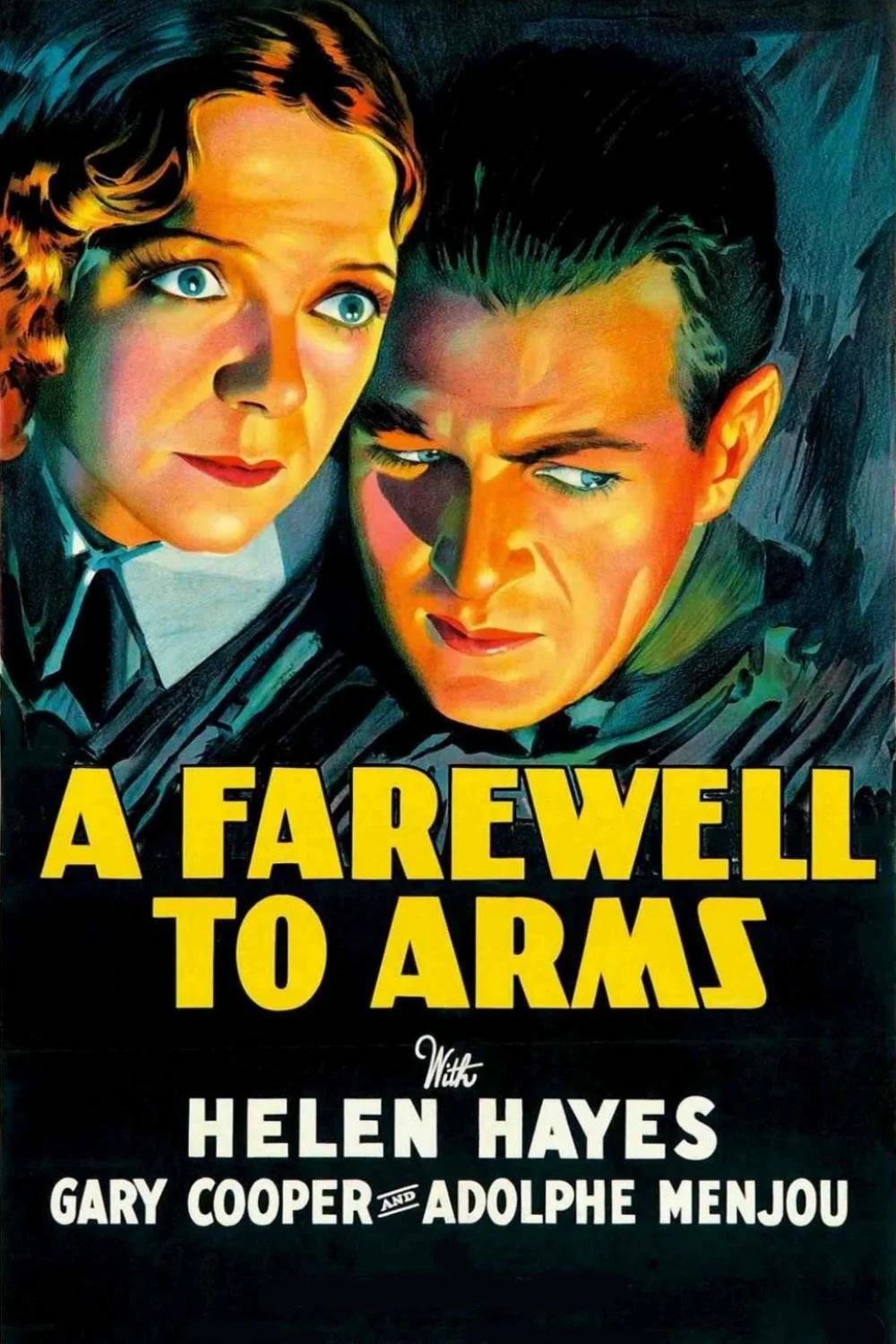
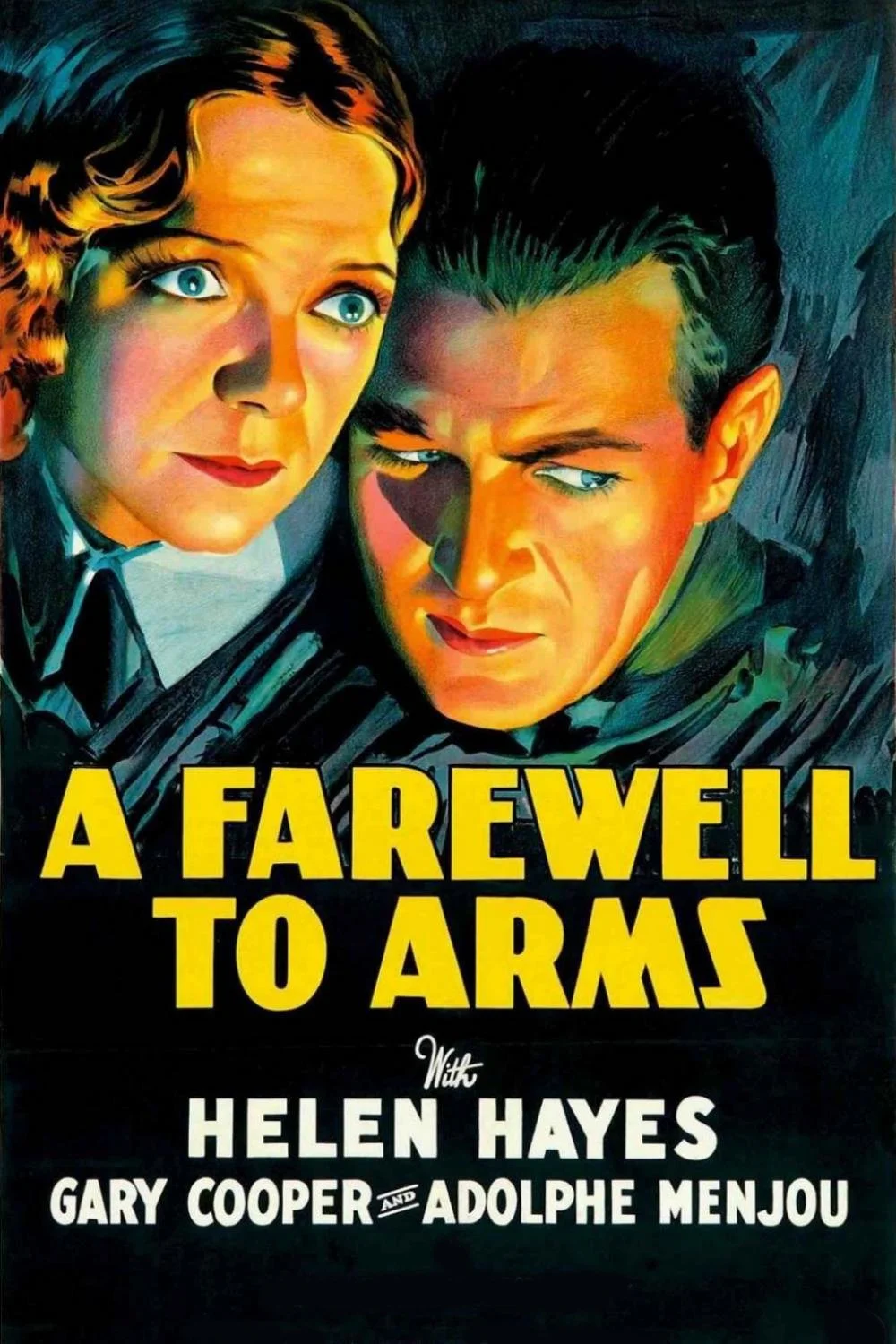
A Farewell to Arms
A Farewell to Arms
Directed by Frank Borzage. 80 mins. (1932)
Gary Cooper – Lieutenant Frederic Henry
An American ambulance officer serving in Italy during World War I falls deeply in love with a devoted British nurse, and together they struggle to find meaning and refuge amid the devastation and disillusionment of war.
Also starring Helen Hayes, Adolphe Menjou, Mary Philips, Jack La Rue, and Mary Forbes.
Based on Ernest Hemingway’s 1929 novel, the film was among the earliest serious Hollywood treatments of World War I romance and helped solidify Cooper’s image as a conflicted yet idealistic hero. It received four Academy Award nominations, winning for Best Cinematography and Best Sound, and was later remade in 1957 starring Rock Hudson and Jennifer Jones.
MARIA’S NOTES
It does seem like Gary Cooper and Ernest Hemingway were destined to meet and become friends, although A Farewell to Arms was made before those two men had ever encountered each other.
My father portrayed the protagonist Lieutenant Frederic Henry and his co-star Helen Hayes, the First Lady of the American theater, starred as love interest Catherine Barkley. The story takes place in war torn Italy in World War 1 and the two of them fall in love. In real life, Helen, by her own admission, became totally smitten by my father. She said “ …if only he had wiggled his finger at me to come meet him, I would have left my husband (the writer Charles McArthur) and child and run off with him.” She muttered this in between takes of one of their love scenes in the picture, looking adoringly into my father’s eyes. She recalled, “Gary looked back at me, took me firmly by my shoulders and said ‘NO, HELEN , NO.’” Nevertheless, they remained friends even though much of her acting life was still devoted to theater and she lived in New York City.
The studio shot 2 different endings for the film. The first was the Hemingway ending, faithful to the novel, in which Catherine dies in Frederic’s arms, and the second was the “Hollywood Ending” where she lives. The studio and distributors opted for the Hollywood ending at first, but later distributed the film internationally with the Hemingway ending where Miss Hayes dies in Cooper’s arms. In some cases at select American theaters, moviegoers could choose which ending they wanted to see.
When I met Miss Hayes for the first time, my husband and I were invited to visit her at her home in Nyack, New York. She greeted us at the front door and as she opened it, she saw me silhouetted by the sunlight outside. She exclaimed, “Oh, you look just like Gary standing there, tall and quiet.” It was a very emotional moment for me. I really did not know what to say and could only focus on the deep feelings running through me. After so much time, a connection was still there. She was as beautiful at the height of her career as she was when I met her––an angel.
Maria Cooper Janis
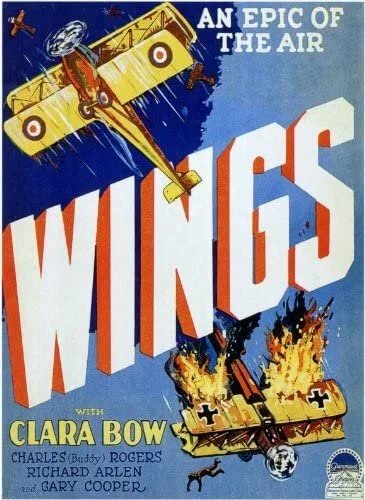
Wings
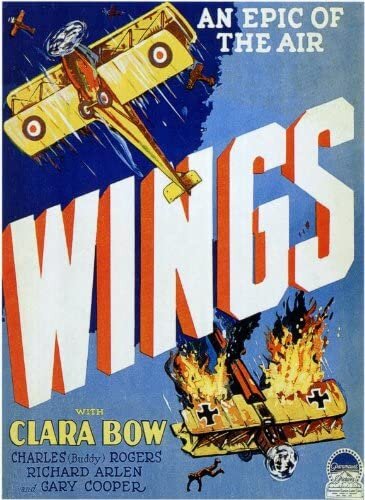
Wings
Directed by William A. Wellman. 144 mins. (1927)
Gary Cooper – Cadet White
Two rival young men from different social backgrounds, both in love with the same woman, enlist as fighter pilots in World War I, where the trials of combat transform their rivalry into friendship before a tragic turn tests loyalty and forgiveness.
Also starring Clara Bow, Charles “Buddy” Rogers, Richard Arlen, and Jobyna Ralston.
One of the first great aviation epics, Wings featured groundbreaking aerial photography and large-scale battle sequences drawn from director William Wellman’s own wartime flying experience. The film won the first Academy Award for Best Picture and also received the award for Engineering Effects.
MARIA’S NOTES
This film WINGS is about the use of airplanes in World War 1 and the talented and brave men who flew them to daredevil extremes. It notably won the First Best Picture of the Year Academy Award in Hollywood in 1927 and introduced on screen, oh so briefly, a young handsome unknown actor who we literally- hear say a only a couple of lines—his last words being “Luck or no Luck when your time comes you’re going to get it”! and he walks out of the tent. Brief minutes later we see a shadow pass over the tent, hear a loud crash, and we know the pilot’s luck ran out! The movie audiences reacted so strongly and flooded the studio with letters wanting to know who was that incredible looking young man who gets killed? And so, a Star was born, who became one of the Icons of the Movie Industry. In those 90 seconds Gary Cooper captured the audience with a force of personality and a look in his eyes that overshadowed the 2 established stars of Wings, Buddy Rogers and Richard Arlen. Director William Wellman, a terrific pilot himselfwho was part of the group of American pilots who joined to fight for the French in WW1 called the Lafayette Escadrille, directed the air fight scenes. One scene called for a plane to cash into a farmhouse. None of the stunt men wanted to do it, and Bill said “Never mind- I’ll do it myself”. You have never seen air combat scenes like this anywhere on the screen—even today, and, with no trick photography! My father’s career was launched by Wings. He never forgot that humble beginning which introduced one of the most revered stars and actors of the 20th century. With his looks, personality and integrity Cooper came to represent the best a Hero can be …the best an American can strive to beon screen and off.
Maria Cooper Janis
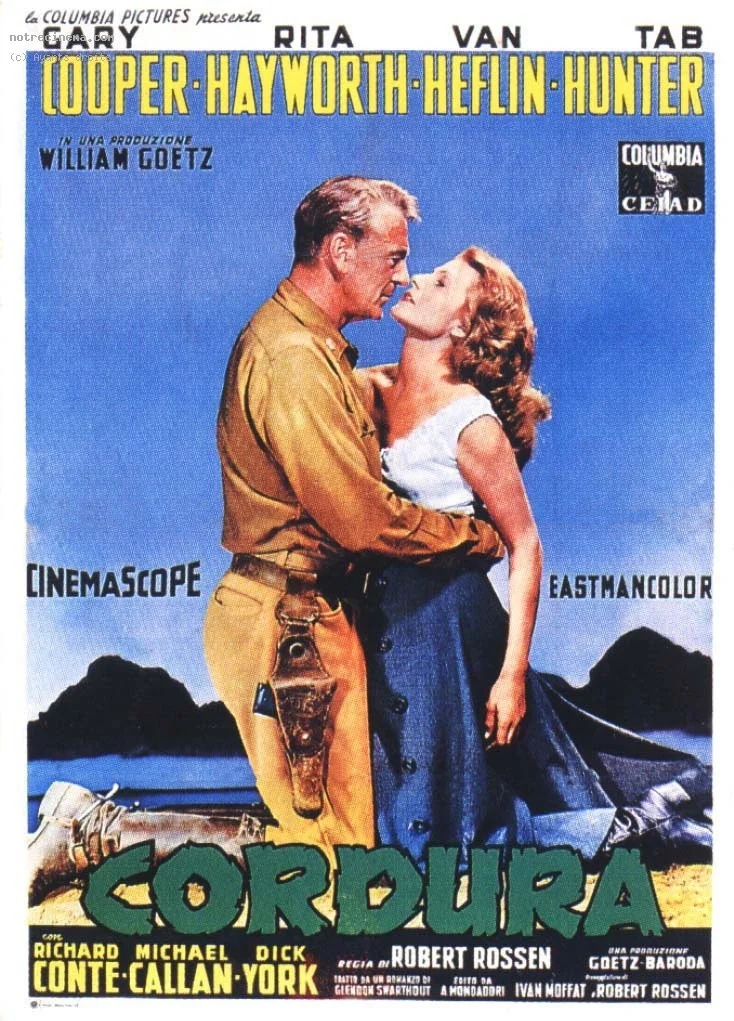
They Came to Cordura
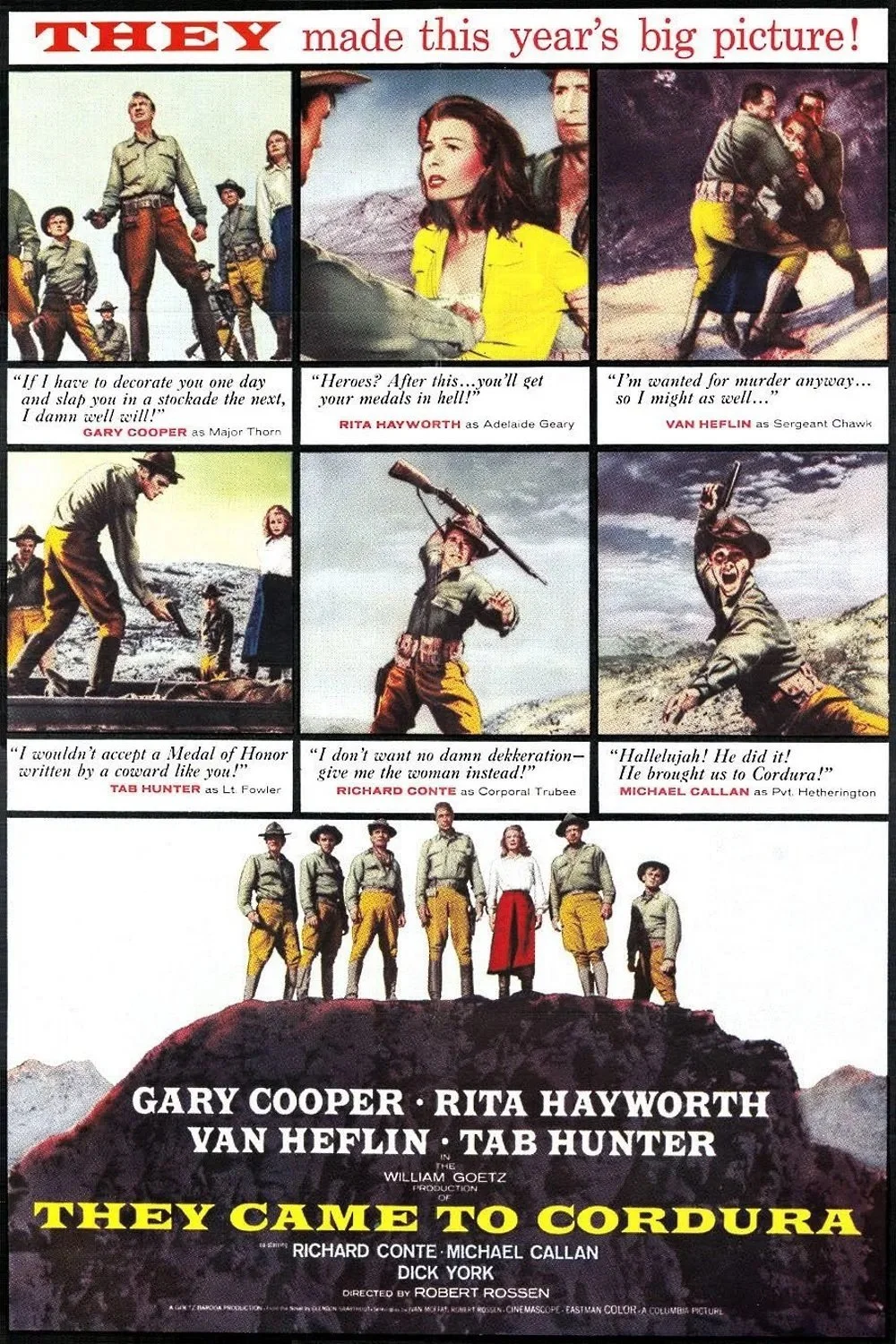
They Came to Cordura
Directed by Robert Rossen. 123mins. (1959)
Gary Cooper – Major Thomas Thorn
An Army officer branded a coward is assigned to escort five decorated soldiers across the brutal Mexican desert during the 1916 Pancho Villa campaign, confronting questions of courage, honor, and moral responsibility along the way.
Also starring Rita Hayworth, Van Heflin, Tab Hunter, Richard Conte, and Michael Callan.
Based on the 1958 novel by Glendon Swarthout, the film presents a stark psychological Western set against the U.S. Army’s Mexican Border operations. Cooper received the Golden Laurel Award for Top Action Performance for his role as Major Thorn.
MARIA’S NOTES
I think no movie my Father made spelled out these age old questions more clearly than They Came to Cordura: “What is Courage? What is Cowardice?”
Cordura itself is not a place on a map, but a symbolic word, a refuge, meaning sanity in Spanish. Coopers’ character here is labeled a coward for hiding in battle, and is mockingly referred to as “yellow guts,” and demoted to being an ‘Awards Officer.’ He is sent out by the US Army to find 5 heroes to inspire recruits for fighting in WW1, then bring them back to their base so they can receive the Congressional Medal of Honor. What takes place along their journey is the “guts” of the story.
There is a TCM documentary about my father—Gary Cooper: American Life, American Legend, in which there is a theme composed by my husband Byron Janis called “Song For a Hero”. Part of the lyrics put forth the questions of this film:
WHY DOES ONE MAN RISK HIS FUTURE?
WHY DOES ONE MAN WALK THROUGH FIRE?
IS IT COURAGE? IS IT CONSCIENCE?
IS IT DUTY OR DESIRE?
My mother and I spent a few days on location with my father out in St. George, Utah. It was pretty desolate in those days, but they were shooting in beautiful, stark, dramatic land, desert harshness, cruel hot sun, and a railroad track that was constructed and led to nowhere. However there was a small paved road that led to Las Vegas some 120 miles to temptation!
That proved dangerous for one of the cast members who had a serious gambling habit. When daily shooting would finish, he would high tail it out of there and down to Vegas. It became necessary for someone to accompany him and scoop him back up into a car at 3 am to be ready for shooting the following day. He’s lucky they all had to look like hell for their roles at that point. He didn’t need any make-up!
By contrast, it was a grueling and hard location for my father, but he was deeply commitment to telling the greatest possible story. He enjoyed working with his co-stars, Van Heflin, Tab Hunter, and of course, Rita Hayworth.
There were moments at times when she had trouble with her lines. Nobody knew much really about Alzheimers then, and she was a real professional trying to keep it—her life & character––together. Talk about courage! She did so well, but there were rough and ignorant comments made behind her back which made my father furious.
His desire to always choose roles that portrayed “the best man can be” was manifested in this story. But it comes to it’s conclusion, not in a simple way, but through asking with important questions that make up so much of our lives.
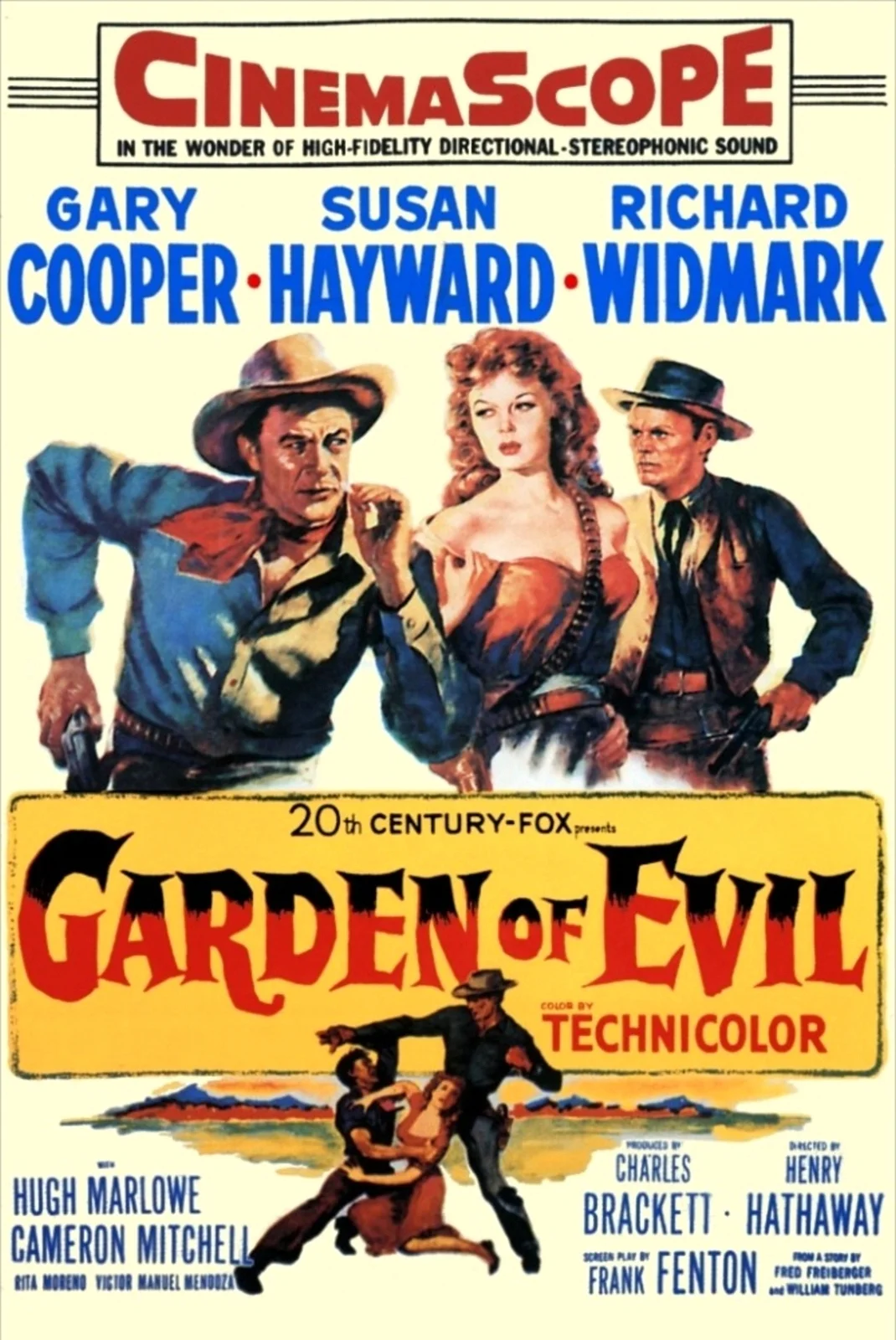
Garden of Evil
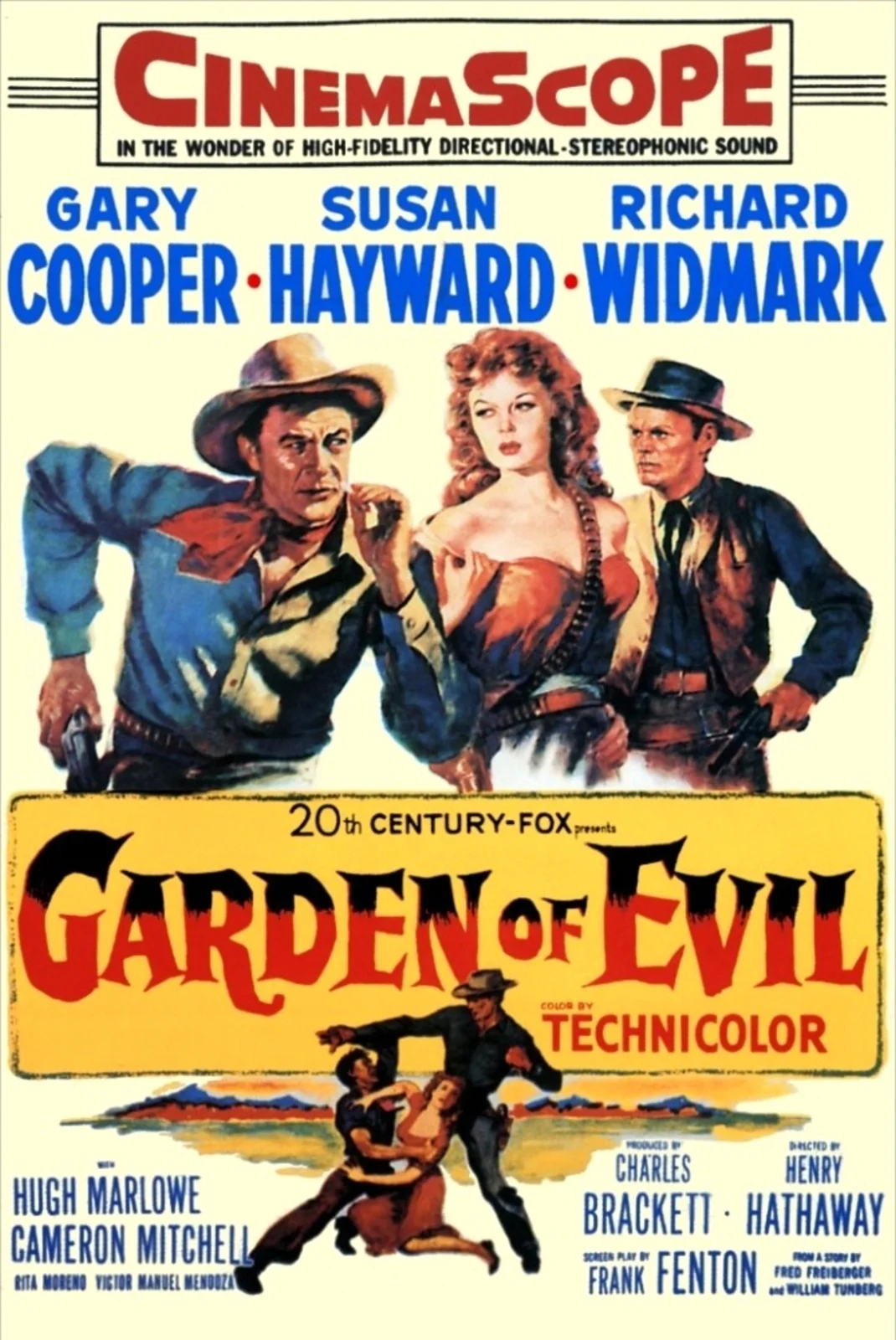
Garden of Evil
Directed by Henry Hathaway. 100 mins. (1954)
Gary Cooper – Hooker
Stranded in a remote Mexican village on their way to the California gold fields, three American adventurers accept a perilous mission to guide a determined woman through hostile mountain territory to rescue her husband, trapped in a collapsed gold mine—each man weighing the promise of fortune against his own motives and survival.
Also starring Susan Hayward, Richard Widmark, Hugh Marlowe, Cameron Mitchell, and Rita Moreno.
Bernard Herrmann’s atmospheric score anticipates musical themes he later developed for Alfred Hitchcock’s Vertigo. Shot on location in Mexico, the film blends psychological tension with rugged frontier adventure.
MARIA’S NOTES
It was rare that my mother and I would join my father on location but it was Christmastime and we wanted to be together as a family so there we were in Cuernavaca, Mexico while the shooting was taking place in the nearby countryside and at the foot of the mountains. It was very rugged territory around Uruapan with a mixture of jungles, black volcanic rock and sinister looking black sand. The Director was a longtime family friend, Henry Hathaway, who had in fact directed my father in 7 previous films.
For the most part, we were all based in Cuernavaca and it was wonderful to be around the Hathaways whom I called Uncle Henry and Aunt Skip. Henry was a passionate and exacting Director and the frustrations of this location drove him crazy. I’ll never forget one complex scene in particular. The “good guys” are trapped in a ravine with cliffs rising high above them, over 1,000 feet, creating a narrow escape route for my father and his team. Of course, the Indians did not like their territory being invaded by the “white man” and were not friendly. The great dramatic shot was supposed to have my father and friends trapped in this ravine with the canyon walls looming over them. Hundreds of Indians on horseback were supposed to appear at the rime of the mesa. A great shot if they were lined up like the Rockettes. They were supposed to appear all at the once silhouetted against the blue cloudless sky.
This was not the day of cellphones. The walkie-talkies we had were not working and Henry was obliged to yell all directions through a gigantic bullhorn. But I guess the wind was blowing the wrong direction because Henry’s instructions seemed to be of no avail. The Indians who were supposed to appear all at once at the rim of the plateau didn’t seem to hear him and with retake after retake, there were only clumps of Indians, not looking very threatening - no dramatic effect at all. Henry yelled and cursed, turned crimson in rage – I was afraid a heart attack was imminent.
My father’s costars were Susan Hayward and Richard Widmark and were fun to hang out with after a day’s shooting and I had the pleasure of being part of the group and dancing with Mr. Widmark. One of the other costars made a bit of a scene off camera with Miss Hayward. One morning he appeared on the set with 4 deep, red, long, fingernail gashes across his cheek. The part called for him to look rather beaten up so the makeup woman did not have to camouflage too much.
My father loved Mexico – its people, their food and the wildness of its natural environments – and relished every time a film could be shot on location in that country.
Maria Cooper Janis

Bright Leaf
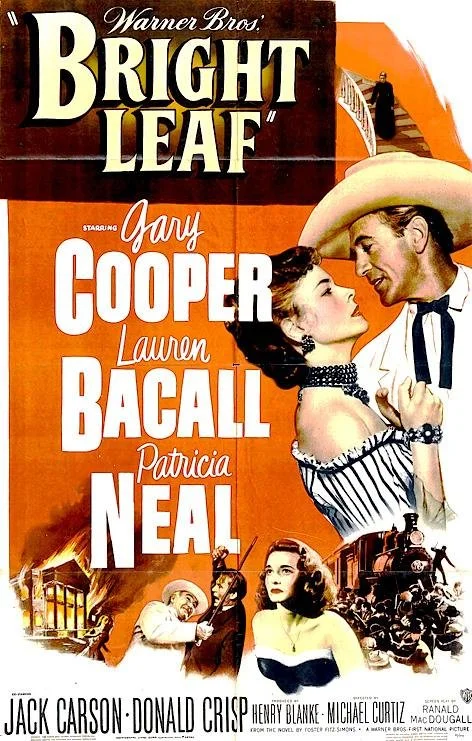
Bright Leaf
Directed by Michael Curtiz. 110 mins. (1950)
Gary Cooper – Brant Royle
An ambitious outsider returns to his Southern hometown determined to topple the powerful tobacco magnate who once ruined his family—using love, marriage, and ruthless industry to seize both fortune and status, with tragic consequences.
Also starring Lauren Bacall, Patricia Neal, Jack Carson, Donald Crisp and Gladys George.
Set in the late-19th-century American tobacco boom. The production acquired an authentic turn-of-the-century cigarette-making machine for historical accuracy. The film marked the final picture of Lauren Bacall’s seven-year Warner Bros. contract.
MARIA’S NOTES
TOBACCO. Be it smoking or chewing it, what a driving force in so many cultures worldwide.
The term “bright leaf” is a description of a certain type of flue-cured, heat-dried tobacco which turns a brilliant yellow. This type became very popular in North Carolina in the early 1840’s. My father’s film Bright Leaf tells the somewhat dramatized story of the great business rivalries in developing America between two Tobacco tycoons in the late 19th century. There were big fortunes to be made, especially with the invention of a cigarette-making machine that took that task away from the previous group of workers––women and children.
The actual men involved were John Harvey McElwee, portrayed by my father in the film as Brant Royal, and James Buchanan Duke, of Duke University. Through the tobacco industry, the Duke family became known as the Southern Rockefellers!
By comparison, John McElwee did not fare so well. As the movie unfolds, we see the tragedy of competition and ambition destroying a man who was trying to make it to the top of the heap. The movie is very dramatic, with strong dynamic tensions between Brant Royal and the two female leads, portrayed by Patricia Neal and Lauren Bacall.
McElwee’s great grandson, Ross McElwee, made an interesting documentary in 2003 about the family drama and history. The film, Bright Leaves, explores the legacy of the tobacco empire in North Carolina and investigates whether Bright Leaf was inspired by the real-life feud between his great-grandfather and the Duke family. Through interviews, family stories, and personal reflection, McElwee pieces together a complex portrait of Southern identity and the complexities of family businesses.
An ironic footnote: As I write about this film, I can’t help but acknowledge that my father died of cancer—the primary site being in his lungs. He smoked like a chimney and tried many times to stop––unsuccessfully! Our close family friend Dr. Alton Ochsner, head of the Ochsner Clinic in New Orleans, showed my father his research laboratory riddles with dozens of cancer-damaged lungs. He came back home saying “Never, never again am I having another cigarette!”
First day back on the set – stress. Out came the Chesterfields or Parliaments. He died from cancer one week after his 60th birthday.
Bright Leaf may be a dramatization, but it offers a powerful glimpse into the roots of American industry and the real cost of ambition. It’s a film worth revisiting—not just for the performances, but for what it reveals about how a single crop shaped a nation’s economy, culture, and conscience.